
Dermatology
Helping Your Pet Feel Comfortable in Their Own Skin
Watching your pet constantly itch, scratch, lick, or chew can be frustrating… for both of you. While pets can’t tell us when something is wrong, their behavior often speaks volumes.
Whether it’s a seasonal allergy, an ear infection, or an ongoing skin condition, our team is here to uncover the cause of your pet’s discomfort and develop a personalized treatment plan that helps them get back to enjoying the things they love most: playing, napping, and spending time with their family.
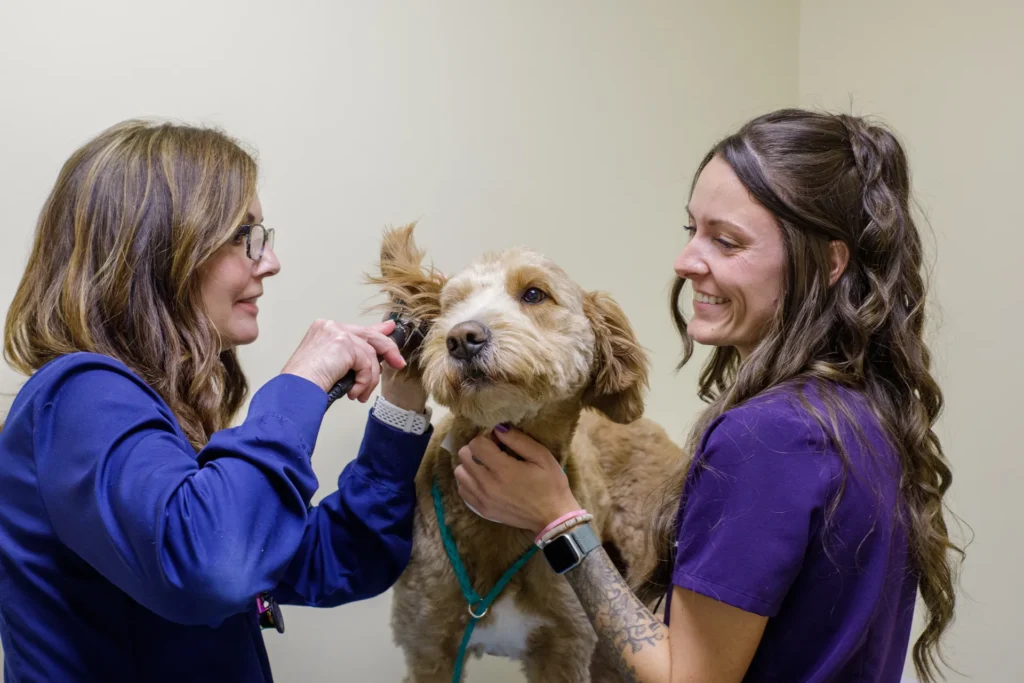
Common Skin Conditions We Treat
Skin and ear problems are among the most common reasons pets visit our hospital. We diagnose and treat a variety of conditions, including:
Allergies (food, environmental, and seasonal)
Ear infections
Hair loss and flaky skin
Hot spots, rashes, and skin infections
Excessive itching, scratching, licking, or chewing
Fleas, ticks, mites, and other parasites
Signs Your Pet May Have a Skin Condition
Cats and dogs don’t always show skin problems in the same way. Dogs often make their discomfort obvious through scratching and licking, while cats are more likely to overgroom or quietly hide signs of irritation. Knowing what to watch for can help you catch skin conditions early and get your pet the relief they need.
Signs in Dogs
Dogs are often more likely to show obvious signs of itchy or irritated skin. Watch for signs such as:
- Scratching more than usual
- Licking or chewing their paws
- Shaking their head or scratching their ears
- Developing redness, hot spots, scabs, bumps, or rashes
- Losing patches of fur
- Producing a strong odor from their ears or skin
- Frequently getting ear infections
Signs in Cats
Cats are experts at hiding discomfort, so skin problems can be more subtle. Watch for signs such as:
- Excessive grooming or overgrooming
- Pulling out fur or developing bald patches
- Scratching around the head, neck, or ears
- Scabs or small bumps, especially around the head and neck
- Red, irritated, or flaky skin
- Frequent ear scratching or head shaking
- Changes in behavior, such as hiding more or becoming less tolerant of being touched
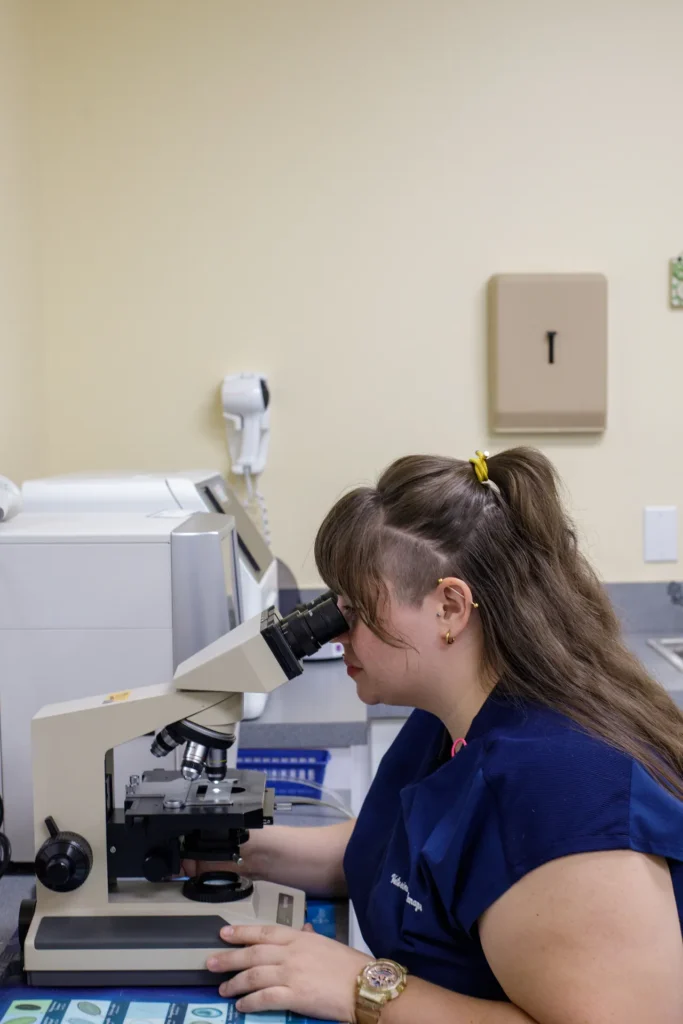
Finding the Cause, Not Just Treating the Symptoms
If you notice any of these signs, don’t wait. Early diagnosis and treatment can help relieve your pet’s discomfort, prevent secondary infections, and get them back to feeling like themselves again.
Many skin conditions can look alike but have very different causes. That’s why we focus on identifying the underlying problem instead of simply treating the symptoms.
Depending on your pet’s needs, we may recommend diagnostic testing such as:
- Skin scrapings
- Ear cytology
- Skin or ear cultures
- Allergy testing
- Bloodwork or other diagnostics when appropriate
Once we have answers, we’ll walk you through the results, explain your options, and create a treatment plan tailored to your pet’s individual needs.
Long-Term Relief Starts Here
Skin conditions are often chronic, but they don’t have to control your pet’s life.
Our goal is to provide lasting relief through personalized treatment, ongoing monitoring, and practical guidance you can follow at home. By managing your pet’s skin condition early, we can help reduce discomfort, improve skin and coat health, and restore their quality of life.
Because every pet deserves to feel comfortable in their own skin.
Help Your Pet Stop Itching
Call us today at 252-753-2611 to have your pet’s skin or ear concern evaluated.